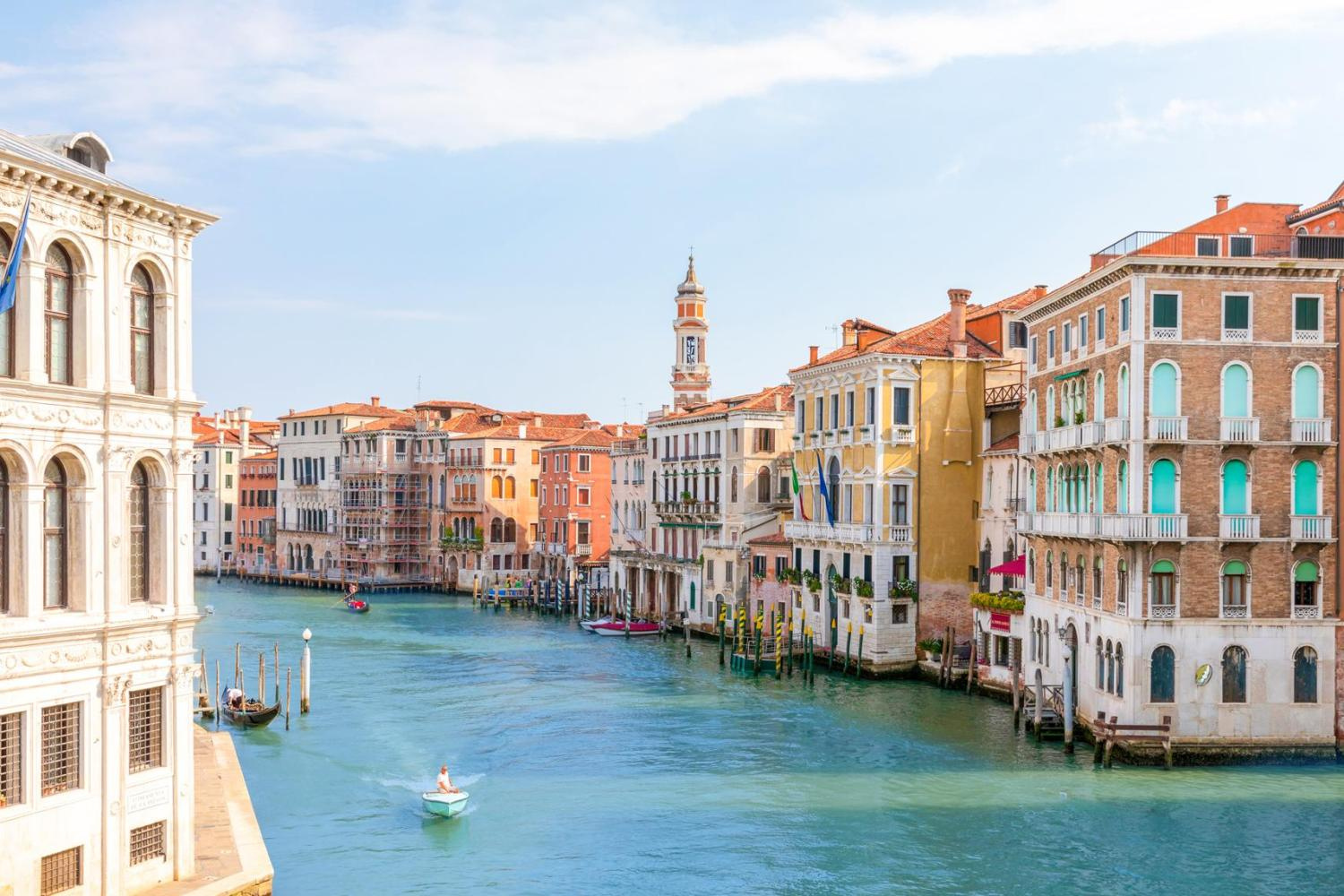
Step out of Venezia Santa Lucia station and Venice doesn’t ease you in. You won’t find a taxi rank or a busy road outside the station doors. Instead, the Grand Canal opens up right at your feet, busy with water buses, delivery boats and the occasional gondola. It’s one of the great arrivals in travel, and it raises a fair question for anyone with limited time: is one day in Venice really enough?
For the highlights, it is. The historic center is small enough to cross on foot in about an hour, and a well-planned Venice day tour can take you from the gold mosaics of St Mark’s Basilica to a gondola ride along the canals and an evening of music in a Venetian church. What one day can’t cover is the slower Venice of the outer lagoon islands, so we’ll point you toward those at the end.
The real trick is timing, because Venice has two personalities. From late morning to late afternoon, the lanes around St Mark’s Square and the Rialto Bridge fill with visitors. By evening, once most day-trippers have caught their trains home, the city that ruled the Mediterranean for more than 1,000 years as the Republic of Venice goes quiet again. This itinerary is built around that rhythm, with three Gray Line tours placed exactly where they save you the most time and show you the most.
Your Venice day tour at a glance
This plan puts the big sights first while the crowds are thinnest, leaves the afternoon free for wandering and saves the gondola for the softer light of early evening. Tour times vary by date, so check the exact start time on each booking.
- 8:00 am: Coffee and a cornetto near St Mark’s Square
- 9:00 am: Absolute Venice: Walking Tour, Doge’s Palace & St Mark’s Basilica (4 Hours)
- 1:00 pm: Cicchetti and an ombra in a bacaro near the Rialto
- 2:30 pm: The Rialto Bridge, a gelato and time to wander or relax
- 5:15 pm: Gondola Experience (25 to 30 minutes)
- 7:00 pm: Dinner & Concert in Venice (3 hours)
Morning: Skip the Lines at St Mark’s Basilica and the Doge’s Palace
Start the way Venetians do, standing at the bar of a pasticceria with a cappuccino and a cornetto. It’s quick, inexpensive and far kinder on the wallet than a table on St Mark’s Square. If you’d like one splurge, Caffè Florian has been serving coffee under the square’s arcades since 1720, making it one of the oldest cafés in Italy.
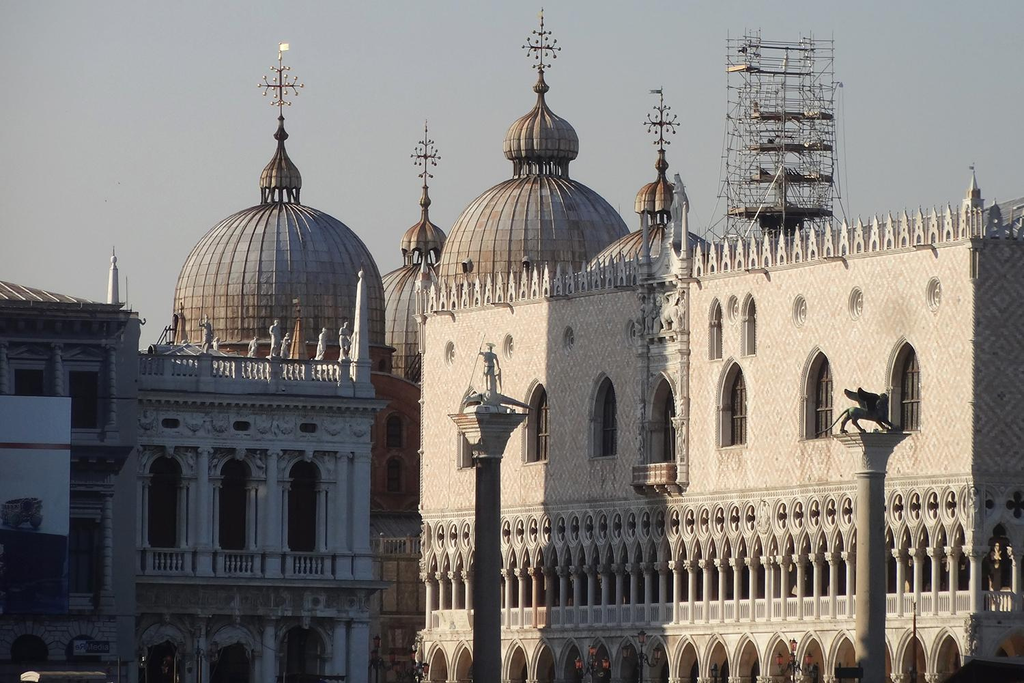
Then head straight into the Absolute Venice: Walking Tour, Doge’s Palace & St Mark’s Basilica (Skip the Line). In four hours, it covers the two landmarks every first-time visitor wants to see, and the skip-the-line entry is the single biggest time saver of the day. In busy months, the queue for the basilica alone can stretch across the square.
St Mark’s Basilica
The basilica exists because of a daring theft. In 828, two Venetian merchants smuggled the remains of St Mark the Evangelist out of Alexandria, reportedly hiding them under a load of pork so customs officials wouldn’t look too closely. Venice built a church worthy of its new patron saint, and the building you see today was consecrated in 1094.
Inside, the domes and walls shimmer with gold mosaics, which is why locals call it the Chiesa d’Oro, the Church of Gold. Look out for the four bronze horses, brought back from Constantinople after the Fourth Crusade in 1204. The originals now live inside the basilica’s museum, with replicas standing guard over the square.
The Doge’s Palace and the Bridge of Sighs
For centuries, the Doge’s Palace was the beating heart of the Republic: home of the doge, seat of government, courthouse and prison all at once. Your guide will lead you through grand council chambers, including the Hall of the Great Council, where Tintoretto’s Paradise is one of the largest oil paintings in the world.
The most moving moment comes as you cross the Bridge of Sighs, the enclosed stone bridge that connected the courtrooms to the prisons. Legend says it earned its name from the sighs of prisoners catching a last glimpse of the lagoon through its tiny windows. The palace’s most famous inmate, Giacomo Casanova, was locked in the cells beneath the lead roof and made a daring escape in 1756.
Good to know: St Mark’s Basilica asks visitors to cover their shoulders and knees, and large backpacks aren’t allowed inside, so pack light for the morning.
Lunch: Cicchetti and an Ombra Near the Rialto
After a morning of mosaics, you’ll have earned a proper Venetian lunch, and that means cicchetti. These small bites are Venice’s answer to tapas, served at the counter of a bacaro, a traditional neighborhood wine bar. Order a few, point at whatever looks good and eat standing up like the locals do.
Wash them down with an ombra, a small glass of house wine. The word means “shade,” and the story goes that wine sellers once moved their stalls around St Mark’s Square to follow the shadow of the bell tower and keep their wine cool.
From the Doge’s Palace, it’s a short walk through the Mercerie, Venice’s main shopping street, to the bacari clustered around the Rialto:
- Cantina Do Mori claims to be the oldest bacaro in the city, pouring wine since 1462. Look for its tiny square sandwiches.
- All’Arco is a father-and-son operation that sources its cicchetti from the Rialto Market next door. It closes after lunch, so don’t leave it too late.
- Cantina Do Spade is old enough to be mentioned in Casanova’s memoirs, a fitting stop after visiting his prison cell.
Classic cicchetti to try include baccalà mantecato (whipped salt cod on bread or grilled polenta), sarde in saor (sweet-and-sour sardines with onions, pine nuts and raisins) and polpette (fried meatballs). Bring some euros in cash, as many of the smallest bacari prefer it.
Afternoon: Cross the Rialto Bridge and Get Happily Lost
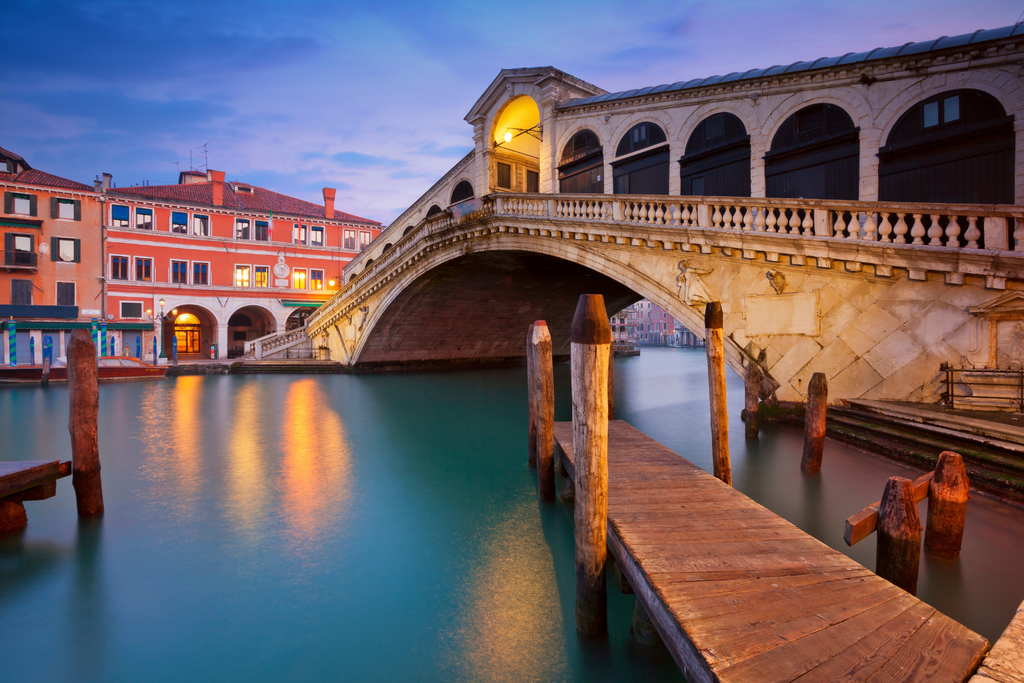
After lunch, climb the Rialto Bridge for one of the classic views of the Grand Canal. The stone bridge you see today was completed in 1591, and for almost 300 years it was the only way to cross the Grand Canal on foot. Its arcades are still lined with shops, just as they were when this was the commercial heart of the Republic.
Then put the map away. The afternoon is the one part of this plan with nothing booked, and it’s the best way to find the Venice most visitors miss: quiet squares with a single well at the center, laundry strung across narrow canals and tiny bridges you’ll have all to yourself. Venice is small enough that you can’t go far wrong, and when you need your bearings, look for the yellow signs painted on the walls pointing “Per Rialto,” “Per S. Marco” or “Ferrovia” (the train station). Stop for a gelato along the way. You’ll have walked it off by dinner.
Want a fuller day? At 4 pm, Secret Venice: Palazzo Grimani and Hidden Corners of Venice takes you inside a Renaissance palace in the Castello district and through corners most visitors walk straight past. It runs for 2 hours, so push your gondola ride to 6 pm if you add it.
Early Evening: See Venice From a Gondola
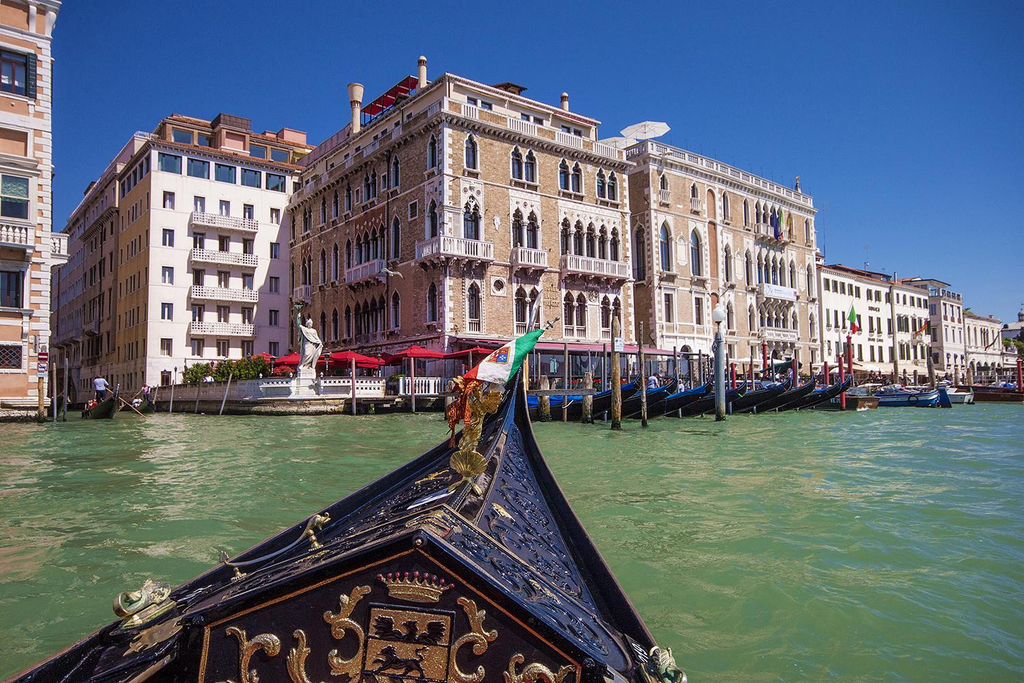
By late afternoon, most of the day-trippers are heading for the station, and the canals grow quieter. That makes it the perfect time for the moment most visitors dream about. The Gondola Experience is a 25 to 30 minute ride that shows you a side of the city you simply can’t see from the streets: water lapping at palace doorways, washing strung between windows and bridges passing just overhead.
Keep an eye on your gondola as you glide along. It’s built slightly lopsided, with one side longer than the other, so the gondolier can row from one side without the boat turning in circles. Gondolas were once the everyday taxis of Venice, and thousands of them crowded the canals. Today, only a few hundred licensed gondoliers carry on the tradition, a trade that has long been passed down through Venetian families.
Prefer the Grand Canal? Swap the gondola for Venice from the Water: Grand Canal Boat Tour, a one-hour private tour along the city’s main waterway and its grandest palaces.
Evening: Dinner and Vivaldi in a Venetian Church
If you step off your gondola with a few minutes to spare, do as the Venetians do and order a spritz. The drink was born in the Veneto region, and the story goes that 19th-century Austrian soldiers stationed here found the local wine too strong and asked for a splash, or “spritz,” of water. Today it’s made with prosecco, sparkling water and a bitter liqueur such as Aperol, Campari or the local favorite, Select.
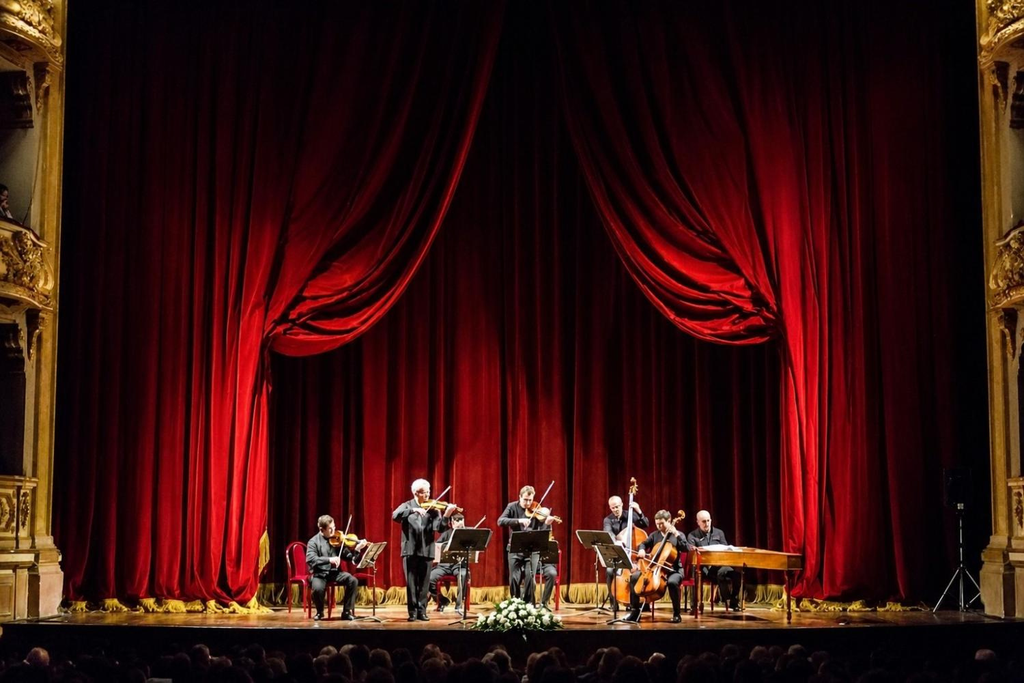
Then it’s time for the grand finale. Dinner & Concert in Venice begins at 7 pm with dinner at a traditional Venetian restaurant a few steps from St Mark’s Square. Afterward, you’ll take your seat in a historic Venetian palace for a concert at 9 pm from April to October, or 8:30 pm from November to March.
In Venice, you’ll hear classical music in the city where much of it was written. For centuries, the Republic of Venice was a laboratory of art in all its forms, and its great composers included Tomaso Albinoni, Benedetto Marcello and Baldassare Galuppi. Their music still fills the city’s churches and palaces today.
The most famous of them all, Antonio Vivaldi, was born in Venice in 1678. He trained as a priest and earned the nickname il Prete Rosso, the Red Priest, for his red hair. Vivaldi spent much of his career teaching at the Ospedale della Pietà, a Venetian orphanage whose all-female orchestra drew music lovers from across Europe. His most famous work, The Four Seasons, was published in 1725.
The program changes by day, so plan around it if you have a favorite:
- Tuesday, Thursday, Saturday and Sunday: Vivaldi’s The Four Seasons
- Monday, Wednesday and Friday: music for cello, strings and harpsichord
Transfers aren’t included with the tour, so plan your route home before you book. If you’re heading back to the mainland, check the time of your last train from Venezia Santa Lucia and leave yourself time to get there after the concert
Tips for Making the Most of Your Venice Day Tours
- Check the access fee calendar. Venice charges day-trippers an access fee on its busiest days. In 2026, visitors aged 14 and over paid between 5 and 10 euros on 60 peak dates between April and July, from 8:30 am to 4 pm. Overnight guests are exempt but still need to register. Rules change from year to year, so check the official Venice Access Fee website before you travel.
- Arrive at the right station. Take the train to Venezia Santa Lucia, not Venezia Mestre, which is on the mainland. Vaporetto (water bus) Line 1 runs the full length of the Grand Canal from the station to St Mark’s, a scenic first look at the city.
- Start early. The streets around St Mark’s are calmest first thing in the morning, before most day visitors arrive.
- Watch the tides in autumn and winter. Acqua alta, the seasonal high tide, is most common from October to January. Since 2020, the MOSE flood barriers have held back the most serious tides, but St Mark’s Square sits at the lowest point in the city and can still get wet. Pack waterproof shoes if you’re visiting in those months.
- Wear comfortable shoes. You’ll cross dozens of bridges, and every one has steps.
- Book guided tours ahead. Venice caps tour groups at 25 people and bans loudspeakers, so tours feel calmer, but popular departures fill quickly.
- Respect local rules. Sitting or picnicking on bridges and monuments, and swimming in the canals, can bring hefty fines.
One Perfect Day in La Serenissima
One day won’t show you every corner of Venice, but it’s enough to understand why the city has captured travelers’ hearts for centuries. Golden mosaics and the halls of the doges in the morning, a wander through quiet backstreets in the afternoon, a gondola as the canals go still and Vivaldi in a Venetian church after dark add up to a Venice day tour you’ll be talking about long after the train pulls away. Our local guides know exactly how to fit the city’s greatest sights into the time you have, so explore all Gray Line Venice tours and start planning your perfect day.
Frequently Asked Questions About A Venice Day Tours
Is one day in Venice enough?
Yes, one day in Venice is enough to see the highlights. In one well-planned day, you can tour St Mark’s Basilica and the Doge’s Palace, cross the Rialto Bridge, ride a gondola and finish with a concert in a Venetian church. Booking skip-the-line tours and starting early are what make it possible.
What is the best Venice day tour for first-time visitors?
For a first visit, a guided walking tour with skip-the-line entry to St Mark’s Basilica and the Doge’s Palace makes the most of limited time. Gray Line’s Absolute Venice tour covers both in about four hours.
Do I have to pay to visit Venice for the day?
On certain peak days, day-trippers aged 14 and over pay an access fee to enter the historic center. In 2026, it applied on 60 dates between April and July. Check the official Venice Access Fee website for the current year’s dates before you travel.
When is the best time of year for a Venice day tour?
Spring and autumn bring milder weather than summer. Weekdays outside the access fee dates tend to be calmer, and from October to January, it’s worth packing waterproof shoes in case of acqua alta.